The Midwest Academy's Leadership Development Group relates thoughts and ideas on martial arts training, strategies for personal growth, and leadership development. These discussions are intended to be supplementary to our curriculum and, by their nature, are neither definitive nor comprehensive. All material contained herein is considered to be intellectual property and protected by copyright.
As the Midwest Academy continues to grow, certain tasks
that we used to preform “in-house” we have now opted to “out-source”. The ultimate
reason for “out-sourcing” these tasks is to ensure that we are optimizing
our time for the educational and training benefit of our students.
One task that we have recently “out-sourced” has been the
distribution of Midwest Academy soft goods (clothing). All clothing items will
now be available through an online “store” that is accessible through the Academy’s home page. As opposed to the Academy storing and distributing gear, you will now order items directly from the printing/embroidery company. Those items will then be sent directly to your shipping address.
In addition, the Academy’s Leadership Development Group hoped to use this opportunity to briefly explain some of the logos used on our soft good to people unfamiliar with them:
Kanji are the adopted logographic Chinese characters that
are used in the modern Japanese writing system along with hiragana and
katakana. Just like written English has various “scripts” (block
writing/printing, cursive, etc.), kanji also has various “scripts”. The kanji
that appears on Midwest Academy soft goods is a "cursive" script and reads as Seizan Ryu or “West
Mountain School”. “West Mountain” is a historical reference to the origin and
foundation of the primary Art that is taught and practiced at the Academy. A
more detailed explanation is available in our student manual.
The term Ryu refers to “school” - not in the sense
of a particular structure, but rather a philosophical root which governs the
overall learning, practice, and teaching principles and methods utilized by “West
Mountain”.
Mon or the crest is not unlike the Coat-of-Arms that once was prevalent and used by most Western families up until recent modern times. The Mon
is seal script derived from the kanji for “West Mountain”; this seal is essentially
the system’s “coat-of-arms”. It is sometimes referred to by Seizan Ryu practitioners
as the “grinning cougar” due to its similarity in appearance to the face of a
feline.
The “Combat Flag” or “reversed US Flag”, when used, appears only on the right
shoulder of some of Midwest Academy’s gear. It
is an acknowledgement that much of
the teaching method specific to the Midwest Academy has been influenced by
various teachers’ experiences in the GWOT (Global War on Terrorism). That
collective experience and subsequent related experiences have played heavily
into the teaching approach of the Academy which emphasizes a utilitarian
approach for both the physical skills and the personal development aspects of
the art. Many people are unfamiliar with why the flag appears reversed. If one thinks of the flag, not as a logo, but
as a loose flag attached to an individual’s arm like a flag pole, then as the individual moves forward, the stripes will flow to the back (giving
it the appearance of being “reversed”).
Sho-Chiku-Bai or Pine-Bamboo-Plum is a 3 circle motif on some of Midwest Academy’s gear. This motif appears in traditional Japanese culture and is referred to as Three Friends
of Winter; each item is representative of strength, flexibility, and endurance respectively, individually, and collectively. The meanings are connoted as these plants are able to survive the adversity
of winter due to their intrinsic attributes. The Academy uses the motif as we believe the
greatest personal growth and leadership attributes often develop in the face of adversity.
LDG Triangle (see ordering website for logo depiction) – The Leadership Development Group (LDG) is a
subset of the Academy’s teacher cadre that specifically focuses on optimizing
opportunities for the personal development and growth of our students
throughout the course of their training. The triangle is symbolic
of interdependent strength as each side requires the others to keep its shape.
It also represents a compass needle pointing “north”; indicative of the
personal code and integrity we expect from our students and ourselves. The number in the center of the triangle is indicative of how many years the Midwest Academy has operated at its current location. This run will feature the number "10".
For more information on classes or to schedule a visit to the Academy, visit www.TheMidwestAcademy.com or call
(630) 836-3600.
The knife was humankind’s first tool and has been a part of
nearly every culture. As humankind's technological skills grew, the knife, as a utility tool, was replaced by
a number of other tools and machines; the blade, as a weapon, also became secondary
to ballistic weapons.
That said, the knife has remained with us, in part due to
its size and in part due to its adaptability; it is a good tool when we lack
better ones at that moment. As a weapon, it is still highly effective. In a previous article, we described CSAT
founder and SOFD/D (“Delta Force”) MSG Paul Howe’s theory of a layered offense:
the layered offense training theory states that the system of fighting
with a rifle, pistol, edged/impact weapon, or empty hand should be fairly
uniform such that transitions in either direction are seamless, adjustments
from force option to force option are minimal, and training for each force
option is complimentary to the others.
At the Academy,
our students' edged weapons education is rooted in Filipino
Martial Arts (FMA), Japanese and Chinese martial arts, and modern day
combatives training. Tactics and
techniques are continually vetted through traditional training as well as in the
modern/current application environment. As a result of these influences, Seizan
Ryu, the teaching methodology used at the Academy, has an advanced edged-weapons curriculum that is constantly evolving while the basic curriculum lays the foundation that has been proven effective through the generations.
Understanding the Purpose of a Fighting Knife
One of our teaching tenets at the Academy is that ‘purpose
dictates process’; at a basic level, Academy teachers discuss the purpose of an edged-weapon as a starting point to edged-weapons training. While a skilled exponent can
use a weapon to create varying degrees of effect, the use of an edged weapon
should always be considered deadly force and the level of conflict resolution
required should be appropriate to using this level of force.
Our first definable
purpose for the edged weapon should be that it is capable of effectively
delivering this level of force as efficiently as possible – the basic
assumption when one is resorting to the use of deadly force is that it is a
defensive response to deadly force already being used by the aggressor(s).
The use of tools for physical conflict resolution, like
the knife itself, is as old as human history.
Tools gave humans – anatomically poorly designed for physical survival
without claws, fur, keen night vision, etc. – an advantage over their base physiology. One of the primary limitations of any physical conflict resolution tool is that it has an optimal range of effectiveness.
The edged-weapon is most effective at what the Academy defines as “close
contact” range. This provides our second definable purpose for the edged weapon: to provide utility at “close contact”
range.
A study of human weapons reveals an interesting correlation between edged-weapons and range: as man evolved, larger edged-weapons, such
as swords – which could be effective at “mid-range” - developed since they had a decided "range" advantage
over the knife. A knife wielding
combatant would have to pass through “mid-range” (where the sword was
effective) to get to “close contact” range (where the knife becomes effective) - that gave the sword wielding combatant has an earlier opportunity (at “mid-range”)
to take action/seize the initiative. The
sword was also more efficient than the knife since its longer length leveraged
the user’s physical strength more effectively.
And while spears and bows were part of every culture’s fighting
arsenals, it was not until the advent of the firearm, which effectively
penetrated armor and did so from “close contact” to “non-contact” ranges, that
humans put down the sword in favor of the firearm. It is interesting to note, however, that while swords are out-of-the-norm, the
knife survived the transition to firearms.
While the sword lost some dominance at the “mid-range” when
compared to the firearm, the knife – to this very day - remains useful at “close
contact” range.
Building a Fighting Process
One of the greatest factors that influences the
utility of a “fighting” knife is its design. Today many people carry
folding knives, spring loaded/spring assisted knives, or specialty blades such
as the karambit or push knives, for example. While these knives have some utility, it is imperative to
remember that defensive/counter-offensive use is the primary condition of our
force application – that means that the defender has been confronted with
deadly force and is responding with deadly force. Knives that require high
dexterity movements just to bring them into the fight put the defender further
into “reaction” – in light of everything just mentioned, the Academy advocates the
use of a single-edged, full-tang, straight-bladed knife as a fighting knife.
After one decides on what type of knife one will use, the
next part of the “process” is to decide how the knife will be employed. The two
factors to consider are: how the blade will be gripped and which hand the
weapon will be used with.
At the Academy, our students build their basic edged-weapons skills around gripping the weapon in a “reverse/icepick” style grip with
the edge of the blade facing forward and the spine of the blade facing the
wielder’s forearm. The blade is also used primarily in the non-dominant hand
(blade in the left hand for the right handed practitioner, for example). There
are a number of reasons to use the blade this way, not the least of which is
that it allows the user to cut and thrust with the blade while also minimizing leverage
against the gripping thumb (the weakest part of the human grip). This grip also allows the knife wielder to strike and grapple without adjusting the weapon; where
firearms are concerned, it also allows the practitioner to employ a firearm
without discarding the edged-weapon.
CRKT Kasper knife mounted on a
VTAC Brokos Battle Belt
Knife design and employment method(s) dictate the
optimal location of the knife - location of the knife is the final part of the basics of edged-weapons utility. Since the directional draw is the most efficient draw stoke, at the
Academy our practitioners learn the advantages of storing the blade on the
non-dominant side hip with the edge somewhere between facing forward and facing
down depending on individual body types, clothing, and lifestyle requirements. The photo (right) shows a set up for a right-handed pistol shooter where the edged weapon is set to be drawn with the left hand into a "reverse" grip.
Under these conditions, the average practitioner can
deploy a blade and deliver deadly force faster than even with a firearm (or in
conjunction with a firearm if appropriate) as demonstrated by former Navy SEAL
and firearms instructor Kyle Defoor in this video.
Training Tips
At the time of this writing, I have been studying,
practicing, & teaching edged-weapons combatives for over 3 decades. One of
the most important training “tips” I can pass on to anyone who is serious about
improving their edged-weapons skills is to train with the weapon in the
non-dominant hand. In most training venues – martial arts, military, and law enforcement
– students train with both partners having weapons in their dominant hand (both
partners with weapons in the right hand usually); at the Academy, we call this
alignment ‘matched’ (training partners right-right or left-left). Very few instructors are versed,
knowledgeable, or skilled in the alignment we call ‘mirrored’ (training partners right-left or
left-right), however, if you consider that most people are right handed and
attack using their dominant hand, the most important training alignment to develop is with the defender using the blade left handed and the attacker attacking
right handed. Unfortunately, this alignment is usually neglected as it is the most challenging for instructors and students and least gratifying for their egos…but that's a topic for another
discussion.
Contact the Academy for information on
viewing/registering for our Weapons Training Program.
Anyone who has been around tactical community for any
length of time, be it as an operator, trainer, and/or leader, is likely
familiar with the Viking Tactics (VTAC) 1-5 Drill. Sergeant Major (ret) Kyle Lamb, US Army
Special Operations combat veteran, author of “Green Eyes & Black Rifles:
The Warrior’s Guide to the Combat Carbine”, and president and founder of Viking
Tactics breaks down the essentials of the VTAC 1-5 drill in this video.
In this article, I will refer to this version of the VTAC 1-5 drill as the basic/base drill.
Industry innovators such as Travis Haley
underscore that there is a difference between rote drill training, and
understanding/developing drills at a “deeper level”. Travis Haley, US Marine Corps Force
Reconnaissance combat veteran, former CEO of Magpul Industries Corporation, and
president and founder of Haley Strategic Partners, LLC demonstrates an advanced application
of the VTAC 1-5 drill in this video.
The purpose of this article is to highlight that trainers/operators/practitioners
need to understand drill training at a deeper level in order to ensure a “best
fit” approach to training using the drills which facilitate optimal skill development within the
constraints of financial budgets and time. At the time of this article, I have
over 15 years of experience as a trainer in the tactical community. Although the core curriculum I use is CSAT based, I do use and teach the VTAC 1-5 Drill as one of
the training platforms for myself and my fellow students/operators.
Three fundamental truths that I believe
trainers/operators/leaders need to accept when looking more deeply into drill
training are:
·No single drill will provide repetition of all
the various skills sets required in any given operational environment;
·Some of the various skill sets needed for the
operational environment are trained in direct opposition to each other; and
·Optimal learning does not occur unless
trainers/operators/practitioners understand the inherent assumptions contained
within a drill’s practice method.
To illustrate these points, let’s again use the base VTAC 1-5
Drill as an example. In the first video, we see the drill executed (15 rounds total on 3
targets) in under 3 seconds. Training the
drill using this method allows practice of many critical technical & tactical skills to
include: optimizing the manner in which the weapon is “welded” to the body,
optimizing the manner in which the shooter traverses from target to target,
& optimizing the manipulation of the trigger. However, in order to optimize the cadence of
the drill, shooters maintain their finger-to-trigger contact while traversing
target to target. When the actions
needed to perform the drill at the cadence demonstrated are extrapolated into
the application environment, an operator moving a weapon from one threat to
another with his/her finger on the trigger (potentially across
innocent/friendly persons) would be violating most tactical SOP’s. What SOP’s you ask? Most shooters who learn
the “4 Firearm Safety Rules” learn that their finger is to be “off the trigger
until their muzzle is on the target”; cases such as Medina v. City of Chicago
show that our legal system considers the placement of the finger on the trigger
when not shooting to be “willful and wanton” conduct. And since we perform in the manner that we
practice, practicing with our finger on the trigger will increase the likelihood
that we will perform that way in the operational environment.
Does that mean that we should drop this version of the
VTAC 1-5 drill from our training curriculum? Absolutely not! It simply means
that trainers/operators/practitioners should understand that when they practice
the drill in this manner, they are training the optimization of aspects such as
weapon “weld”, traversing from target to target, manipulation of the trigger,
etc.
It is incumbent upon trainers and leaders to develop
utility in their training drills that are consistent with their application
environments. These “higher utility/application
oriented” drill variants should be added into the curriculum.
The variants should include the physical skills performance expectations
that we seek during application: for instance, if we expect the shooter’s finger
to be out of the trigger during movement from one target to the next, we have
to incorporate that into the drill’s “language/expectations”. If we expect a follow through sight picture
on targets that have been engaged, we likewise have to set that into the drill’s
“language/expectations”.
In this final video, we look at a "utility/application
oriented" variation of the VTAC 1-5 drill.
In this version, some of the individual skills being trained include
finger off the trigger while traversing from target to target, follow through
sight picture prior to traversing from target to target, and a speed load
during the drill execution (intentionally set up by using a partially filled
magazine). Since we wanted to
incorporate the rifle reload skill, we set the drill distance up along the
method described in the previous video by Travis Haley. This is because of the tactical preference to reload the rifle
at longer distances while tending to transition to the pistol at closer
distances. Even under 10 seconds total
time, the trigger manipulation in the drill is less than optimal when compared to the base drill. So while this variation builds utility, for a shooter to improve trigger manipulation skills, the original VTAC
1-5 drill should be used. So here we see two inherent opposite methods needed to train two necessary skills for the operational environment: optimal trigger manipulation when engaging and finger off the trigger when traversing, as examples.
By constantly returning to the basic drills,
extrapolating the current needs of the operational environment, and
incorporating them into utility-oriented drills, we build a feedback loop that
deepens our understanding and continually builds our skills.
"Nana korobi ya oki" (Fall seven times, rise eight).
In the nearly three decades that I have been a student
of the Warrior’s Path, I have had the opportunity to explore various
disciplines of Warrior training: as a combat veteran of the United States Army, as a member of law
enforcement’s elite special operations teams, and –at a core level – as a life
time martial arts student, practitioner, and teacher.
Warrior training has many tangible and obvious value
adding benefits that relate to self-defense, physical health/fitness, mental
acuity, etc. However, these are what
may be described as the “surface level” benefits of the discipline. While the training must be focused on these obvious aspects, much of the deeper value is hidden from the uninitiated eye.
The reality is that most student's of Warrior training, even most soldiers, will
never actually see "combat". Most law
enforcement special operations team members will never be in direct action
operations. And most martial arts
practitioners will never have to call upon their skills to defend
themselves. As a real-world illustration
of this point, our dojo, the Midwest Academy, is located in the greater metropolitan area of
Chicago, Illinois. 2012 FBI Crime
statistics show that the city alone logged 12,272 aggravated assaults (instances of people trying to kill someone) and 500
homicides (instances where people succeeded in killing someone). Despite these staggering
statistics which earned Chicago the moniker of “murder capital of the nation”, when
expressed as a percentage of the total population of the Chicago area, the
homicide rate is about 7.1%. That reinforces the idea that the significant
majority of the population, over 90%, will never be directly affected by violence. Since most people intuitively know that to be true, the obvious question becomes why one would expend the time and effort required of Warrior training.
Are there significant tangible value adding benefits that an individual develops through Warrior training other than personal protection? I certainly believe so. In fact, the privilege of assisting others in
developing these less obvious benefits of Warrior training was a critical
influencing factor leading to the inception of the Academy.
This article briefly touches on what, I
believe, are two of the most valuable personal attributes that Warrior training develops in those who integrate the training into their lives. Those attributes can be described collectively
as emotional resilience and mental toughness.
Inferences to the tenacity developed by fostering
emotional resilience and mental toughness can be traced to Judeo-Christian
writings in the Old Testament of the Bible which states, “For the just man
falleth seven times, and rises again” (Proverbs 24:16, King James Bible); to
the teachings of Bodhidharma, founder of Buddhism, who taught followers to, “Fall
seven times, rise eight times” (Bodhidharma); and are even described in the modern
warrior ethos of our US Special Operations Forces when they commit that, “If
knocked down, I will get back up, every time” (Navy SEAL ethos). The point here is that we, as humans, learned a long time ago that emotional resilience and mental toughness were high value attributes to have/develop; and we know that they still are today.
While the Warrior’s Path requires us to be committed to
the development of solutions to life and death problems, the “test” for most on the Path does not appear on the battlefield, but rather presents itself through
the various challenges and hardships of life – the loss of one’s health, the loss of one's job, the
illness of a loved one, the constraints of time, money, energy and the effects on
one’s goals and life direction are but a few examples. Less emotionally resilient individuals, quite often, fall
into cycles of anger, hopelessness, and despair when facing these challenges. Many individuals lose momentum and give up hope for a better future, dreams of success, and direction for a better
life; instead they live a quality of life that is in proportion with their commitment
to “getting back up”. While getting knocked
down is less than enjoyable, "staying down" is commensurate with living in fear, with failure as a companion, and drowning in a sense of defeat. Staying down does
not require courage or faith; getting back up requires both. In short, while staying down is unpleasant, for the individual who has not developed emotional resilience and mental toughness, it is easier than getting back up and getting back to the challenge with a "can-do" attitude!
Emotional resilience and mental toughness, developed through Warrior training, allow an individual to “embrace the suck”; to get up, to lean back into the challenge
with either a more refined strategy for success, or with the sheer force of
determination to push through, or – more often – a combination of both. The attributes of emotional resilience and
mental toughness are not intellectual. They are visceral. They are a glint in the eye, a feeling in the gut. An individual cannot “pump up their psyche” in an sustainable way. Emotional resilience and mental toughness are attributes
that are similar to strength, flexibility, or endurance – qualities built slowly and purposely over the
course of time. Good Warrior training programs
have a level of emotional and mental challenge designed to push the
practitioner outside of his/her comfort zone; to challenge them to
push through discouragement, fatigue, boredom, etc. The deliberate adversity designed into Warrior training is the “work load” though which the “muscles” of emotional resilience
and mental toughness are developed. It is the
grounds upon which the trainee/student learns to exercise their courage and faith - the prerequisites for forging emotional resilience and mental toughness.
The actual formula for developing these attributes is
quite simple. Get started (in a high
quality program). Lean into the
challenge. Embrace the suck. If/when knocked down, get back up, every time. And take quitting off the table of options.
"Nana korobi ya oki" (Fall seven times,
rise eight).
No Contract Training is just one of the unique
characteristics of the Midwest Academy experience. Many people who visit a martial arts school or
gym to get information or to try out a training session spend much of their
time being bombarded by a “sales pitch” from the business’ staff.
While it is naïve to miss the fact that martial arts
schools and gyms need to make a profit in order to keep operating, you also shouldn’t
ignore that the reason most schools and gyms encourage a student to sign up for
programs such as 3, 6, 12, & 24 months, for
example, is because they know that the average student/trainee will lose
interest in a just few weeks’ time. The training
contract is there to ensure future cash-flow for the business (this is the same
business model that most health clubs operate on).
At the Midwest Academy, we have a different approach to
student selection and retention. We
screen and assess our prospective students during their initial conversations
and visits with us; we admit those who pass screening as probationary students
(probationary students train tuition-free as our guests) for a short period of
time until such time as an assigned mentor recommends them for regular student status
(recommendations for regular student status are made on a combination of
attitude, attendance, and demonstrated skill progress). At that time they are
given the option to take on regular student status at the Academy. In our experience, this selection process
eliminates the need for training contracts by ensuring a best-fit approach between students and the Academy.
No contract training means that students with poor
attitudes (which we rarely encounter due to our selection process) or students
failing to perform (again, another rarity since all Academy students are highly
self-motivated) can be removed from the Academy Student Roster at any time for
cause. Additionally, a student can opt
to stop training at any time of their choosing (students who drop on request may
return, however, they must reapply through the Academy’s screening process).
By operating the Midwest Academy in this manner, we
maintain our focus exclusively on the quality of training that we provide as
opposed to writing student training contracts, tracking contract renewals, etc…less
time in the office and more time on the training floor is value adding for
Academy students. Our confidence in the
Academy is confirmed by the near zero lack-of-interest-related-attrition rate at
the Academy (that means almost no one has ever quit because they just aren’t
into training anymore) – Academy students can leave if ever their interest
wanes, but they don’t because their interest doesn’t. And you won’t want to quit due to boredom,
stagnation, or a general lack of direction in your training either at the Midwest
Academy!
I have been training people in physical skills since I was
15 years old – at the time of this writing, that’s 25 years of teaching experience. Some of the people whom I am privileged to teach are professionals who require physical skills as part of their
profession – military and/or law enforcement personnel generally. Others are physical skills/martial arts
students who have a professional approach towards their own training.
This month, The Midwest Academy provided a 120 minute “Women’s
Self-Defense Workshop” at a fundraising event; we wish to pass along some of the general
lessons learned from that workshop. While conducting research into current “Women’s Self-Defense workshops”, we looked at many of the already existing training platforms and discovered they generally had the following aspects in
common:
They advocate that a woman strike an assailant’s
“eyes, throat, & groin”;
They advocate the use of elbows, knees, &
head butting; and
They presume a single male attacker as the only assailant.
In order to validate the workshop training, many of these programs dress the mock assailant in a padded suit and basically allow him one attack after which time he remains stationary and the student uses him as a “punching bag”. A significant number of these programs also have some "gimmick" that the course is based upon - for example, the 'high heeled shoe' as a weapon.
This is excellent marketing in that it allows people to
leave with a sense that they have some solutions with which to defend
themselves, but is that really the case? From an anatomical perspective, while these are "soft targets", the “eyes, throat, & groin” are the
most instinctively & reflexively guarded parts of the human anatomy. In addition, in order to directly strike these targets, the defender places herself directly in front of the attacker - a position that the
Academy refers to as “work-space to work-space alignment” – in this alignment,
the defender has no advantages and the position is most favorable to the
larger, stronger, & more aggressive person.
In addition, the defender’s eyes, throat, & groin are as equally vulnerable
as the attacker’s. Finally, as if that’s
not enough, the strategy advocated by these programs requires the defender
to be at a distance close enough to perform an elbow strike, knee strike, or head
butt (which, if incorrectly performed, can cause the defender to lose consciousness). And while those anatomical weapons are formidable by all accounts, even trained fighters do not stand and strike at that distance while in that position (work-space to work-space alignment). The formulaic approach clearly has marketing advantages, however, it likewise lacks integrity with regard to the welfare of the student.
The Truth…
Almost all of our attendees were likely surprised during the workshop
introduction where we simply stated that they would not leave the workshop with
any applicable skills. This is not a
reflection on our curriculum, teaching ability, nor any such factor – the statement is based on an understanding of how humans create utility with regard to physical skills – utility is the ability of the skill performer to effectively perform the
skill in the environment and under the conditions for which the skill is
designed. Utility is the process of
moving from a knowledge set – knowing what to do given a set of stimuli – to a
skill set – doing what you know given a set of stimuli. It is often described as the path from unconscious incompetence to unconscious competence - we have previously made the skill building analogy with how one learns to drive a car. How long does that take? There are a number
of factors some of which include: the existing skills of the learner, the
complexity of the skill being learned, the methodology being used to teach the
skill, the frequency in which the skill is practiced, & the intensity of
the training.
The two points, however, to always keep in mind when learning a physical skill are:
·No physical skill can be internalized
(unconscious competence) in 2 hours, 2 weeks, 2 months, or probably even 2
years; and
·There is a direct relationship between practice
and skill development – the more you practice (assuming correct practice), the
better you will get.
Anyone that tells you otherwise is doing you a disservice.
It is not the Academy's position that there is truly a difference between “men’s self defense” and “women’s self defense”; there may
be a case for beginning the training process at different points as, based on empirical
data, men & women tend to be attacked for different reasons/purposes and thus are attacked differently. Most attacks on
women are initiated with some type of control as most women are attacked by
attackers that wish to control them. Most attacks on men are initiated with some type of strike or weapon since the objective is to remove their ability to resist the attack. However, eventually, regardless of gender, a quality training program must address all categories of attacks.
Therefore during this workshop we focused on a principle
based solution that achieved the following objectives:
Moved the attackers control further away from
the attacker’s body core (thereby weakening him) and closer to the defender’s
body core (thereby creating a relative leverage advantage in favor of the defender);
Forced the attacker to maintain the control with
“limb strength” while allowing the defender to release the control with “core
strength” (creating a relative strength advantage in favor of the defender);
Moved the defender into a “flank” position on
the attacker making it more difficult for the attacker to continue attacking and easier for the defender to strike, control, or escape (creating both a relative
position & speed advantage for the defender).
We used a few variations of the same attack, but the above principles and movements are basic solutions to almost any control from any position.
A final thought on the 120 minute workshop was that by using a
principle based approach, students were leveraging Hick’s Law to their advantage. Hick’s Law states that the greater the number
of options, the greater the reaction time needed to employ any of them. Since students essentially learned one
principle, their reactions will eventually be very efficient. We say “eventually” since it still requires
practice to internalize the mechanics of this principle.
The Midwest Academy's goal in providing workshops is to educate the public on the role of awareness in personal protection. With regard to physical skills, it is our objective to provide a realistic overview of what a usable skill set is as well as to provide the foundation to recognize what utility-oriented training looks like.
For information on this or other programs offered by
The Midwest Academy, please visit our website.
In December 2012, I was one of a few expert guests on a
radio talk show discussing “tactical training”.
The show’s host asked for a definition of “tactical training” (the show’s
topic related to firearms training specifically and thus the answer provided was in terms of firearm’s mechanics and application - however the concept applies
more generally to all types of armed and unarmed combat sciences); while the
answer I provided of applying the basics which were mastered in a ‘flat’
environment (without all the dynamics of the environment of application) in the
‘application’ environment may not have understood by the show’s host, it was
agreed upon my fellow guest “tactical firearm’s training” experts. I found myself at a slight loss as to why the show's host, the president of a firearms training company himself, did not understand what, to me, was a simple response - however as I thought more about it, I began to realize that fundamentals practiced outside the "application environment" are conducive for repetition, but not for building problem solving skills. I also realized that most training is repetition oriented, but not problem solving in nature - so even long standing experts may not have a good understanding of problem solving if all they have focused their training core on is repetitions. And ultimately "tactics" are about problem solving tense, uncertain, and rapidly evolving problem sets.
For the past several years, the Midwest Academy has taken
our TAB (Tactically Applied Basics) Module on the road to various training
venues – the training gap that the program addresses is simple, but extremely
relevant to the “application environment” and thus what makes it a “tactical”
program. That said, before we present you with
our challenge to add to your training regimen, let us offer you a succinct look
at the “why’s” involved:
"The Why's"
Most combatives (armed, unarmed, & even
firearm-based) are taught in straight line relationships. Some of the reasons for that are:
It is easy to manage a group of students when
everyone is lined up the same way;
It also allows for a safe training
environment; and
It maximizes a training space.
These straight line relationships are what we at the
Midwest Academy define as “0% basics” – they are flat – there are no
deviation dynamics such as lateral movement, elevation changes, changes in
distance, etc., between the threat and
the defender. The practice of “0% basics”
is useful for the development and refining of mechanics that are fundamental to
whatever specific combative technique one is studying. For example, in a fistic strike, the
fundamentals likely should include the shift of the weight forward and down
combined with the alignment of the hip, shoulder, elbow, and weapon surface to
the target’s contact point. For a
firearm, fundamental practice may include establishing a natural point of
aim, proper grip, proper sight alignment, and correct trigger press. Both of these examples are the combat science
equivalent of learning to drive in the store parking lot after the store has
closed and everyone has gone home. It is
a needed building block that facilitates fundamental skill development, however
until one takes the vehicle to the “application environment”, the skills needed
for driving on a highway with merging and lane changing remains an elusive theory.
"0% Basics" or 'flat' fundamentals
The TAB module draws from the teaching perspectives of the MOUT
(Military Operations on Urban Terrain) and SWAT (Special Weapons and Tactics) environments,
both of which initially focus on understanding the geometric angles
created by various doorways, room designs, building architecture, etc, and using that knowledge as a force multiplier in the action-reaction model (OODA Loop); in the case of the TAB Module, it is applied to the “tool kit” of the unarmed combatant (the base layer of the layered offense theory below).
This approach is dovetailed from the layered
offense training theory advocated by CSAT Founder and SOFD/D (“Delta Force”) MSG
Paul Howe (ret) which I first learned as a young soldier and later refined under MSG
Howe’s instruction; the layered offense training theory states that the system
of fighting with a rifle, pistol, edged/impact weapon, or empty hand should be
fairly uniform such that transitions in either direction are seamless,
adjustments from force option to force option are minimal, and training
for each force option is complimentary to the others. Using this as the base development
perspective for the presentation of the TAB Module allowed myself and the other
Midwest Academy instructors to leverage our military and law enforcement special
operations backgrounds not to “bring Special Ops to the training floor”, but
rather to take the “training floor into the application environment”. The rationale for developing the TAB Module is based on our collective experience which confirms that the action-reaction model, which integrates distance, angle, initiative,
etc, works against the defender unless the defender learns how to maximize the
geometry of the urban environment.
A"corner fed doorway" - the black ring that has been added shows the area that the waiting attacker can immediately control placing the defender at reactive disadvantage if he does not understand how to maximize geometric angles.
This topic is both too broad and too deep to present in
this type of a format, however, if you have read this far, I think you get the
point of the “why’s”, so on to the “how’s”:
"The How's"
Being introduced to the geometry of the application
environment removes some of the “neatness” associated traditional “0% basics”
in the “flat” environment. As combat
athletes, we normally train these basics on a fixed position target (such as a
heavy bag) or with a partner (such as with pad drills); in either case, we know
we are performing the basic, so we tend to pre-align in a manner that puts us “center
on” the target. Once you have a solid
understanding of your basics at this level (we suggest at least conscious competence), we encourage you to take the
following challenge:
Instead of beginning “center on” your target, place the
target where you would have moved to evade the basic you are working on (see above diagram). In general, the targets would be outside the
left and right planes of your shoulders.
From here you will find that many of you will get tuned into the skill
set of smoothly shifting weight since you are required to initiate lateral
movement to put yourself “center on” the target prior to executing your basic. There are two basic methods of shifting and stepping
that you will learn by doing these “5% adjustments”:
Method 1 – the target is on the outside of the
direction of rotation of the lead leg (for example, defender is left foot lead
and the target is to the outside of the defenders left shoulder) – the defender
will need to un-weight the lead leg, move it laterally to the outside (and
forward if distance requires) with the rear leg moving laterally to the inside;
or
Method 2 – the target is on the inside of the
direction of rotation of the lead leg (for example, defender is left foot
forward and the target is to the outside of the defenders right shoulder) – the
defender will need to un-weight the rear leg, move it laterally to the outside (and
forward if distance requires) with the lead leg moving laterally to the inside.
Writing is not always conducive to describing human
motion, however, students at the Midwest Academy and other students that have
been introduced to the TAB Module incorporate these types of “fundamental”
evolutions to their practice with results that increase their agility,
adaptability, and the ultimate utility of their skill sets. If you train simply to "get in shape" with no regard for the application of combatives, the added lateral movement will give you a level of conditioning that few other training drills can provide. Finally, the understanding you gain by doing these drills will also decrease training/application injuries and increase the sustainability of your training by reducing "over extension" and working "outside your work-space" inefficiencies.
We invite you to add these drills to your practice and let us know what you think. If you have any questions on how to
incorporate this into your own training or wish to learn more about ours, please contact us
at (630) 836-3600 or through our website.
Greetings and welcome to The Academy's Personal Leadership Development page.
I'm David, Director of the Midwest Academy, and I'd like to take a moment to explain the value of this page to you.
This page is an online supplement read by people in the martial arts community, military/law enforcement personnel, and numerous people in leadership roles. Regardless of your background, everyone is welcome to read and/or participate in the discussions.
I began this page to record some of the ideas that were being shared amongst seasoned students and teachers of both traditional and modern martial arts, as well as the leaders and experts, in all areas of life, whom I've had the good fortune to learn from and spend time with.
In my travels, deployments, and trainings around the world, I've learned that there are general patterns to creating success no matter which area of life you choose to create it in. One practice that keeps us focused on whatever our personal definition of success may be is to share and discuss our own ideas and to listen and learn from other peoples successes. That's what we intend to do here...so welcome and enjoy!
Respectfully,
David
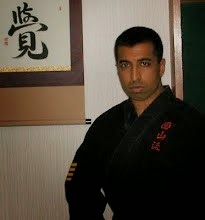
David Hakim, Director of the Midwest Academy of Martial Arts and Special Operations Team Leader
"Perpetual optimism is a force multiplier." - General Powell -
David is the Director of the Midwest Academy of Martial Arts, a unique school that is progressive in its methods and traditional in its philosophy. He is recognized as a master teacher of the Seizan-Ryu system and has extensive expertise in armed and unarmed martial arts.
He is a college graduate with an MBA and MS in the Science of Organizational Behavior and Development; he is proponent of both formal and informal education.
David is a military combat veteran and a law enforcement special operator, leader, and veteran trainer with over a decade of special operations experience. In addition to the martial arts skills & philosophies, he is considered an expert professional in the areas of weapons, tactics, strategy, and leadership.
Our purpose is to help each student realize and maximize his/her true, individual potential, both physically and mentally. Holding true to the philosophy of excellence, we seek it for ourselves, while guiding our students along the same path. We strive to assist students in developing proactive defense skills and in enhancing their ability to maintain composure and defend themselves at critical levels of conflict, be they physical, mental or emotional.

 Mon or the crest is not unlike the Coat-of-Arms that once was prevalent and used by most Western families up until recent modern times. The Mon
is seal script derived from the kanji for “West Mountain”; this seal is essentially
the system’s “coat-of-arms”. It is sometimes referred to by Seizan Ryu practitioners
as the “grinning cougar” due to its similarity in appearance to the face of a
feline.
 The “Combat Flag” or “reversed US Flag”, when used, appears only on the right
shoulder of some of Midwest Academy’s gear. It
 Sho-Chiku-Bai or Pine-Bamboo-Plum is a 3 circle motif on some of Midwest Academy’s gear. This motif appears in traditional Japanese culture and is referred to as Three Friends
of Winter; each item is representative of strength, flexibility, and endurance respectively, individually, and collectively. The meanings are connoted as these plants are able to survive the adversity
of winter due to their intrinsic attributes. The Academy uses the motif as we believe the
greatest personal growth and leadership attributes often develop in the face of adversity.



 Posts

