The Midwest Academy's Adult Information (MA-AI) Guide is a "student manual" of sorts. It provides new students with guidelines and expectations that add value to the Academy experience.
We make available a Public Version of the manual by using the link below. While key information is withheld in the Public Version, we make it available as prospective students may find it beneficial in selecting a training program.
https://www.box.net/shared/9txd9eu8ui5pslxlg5ib
Saturday, December 31, 2011


2012 1st Quarter Grading
Grading will be conducted in January 2012.
The Grading Seminar will be held on Saturday January 28, 2012 from 1300-1600 hours (1:00 PM -4:00 PM).
The seminar will be focused on the topic of Edged Weapons and is open tuition-free to all Midwest Academy students as a means of making up missed class hours.
Students eligible for grading, however, must submit their grading applications to the office by January 14, 2012; please check the student bulletin board for the eligibility list.
Please note that 2012 brings a change in the Academy's grading policy in order to accommodate students with various schedules. Seminar attendance is strongly encouraged by the Academy's Leadership staff, however, is not mandatory for grading. Grading eligibility is a result of attendance, mindset, and performance assessments conducted regularly by the Academy's Leadership staff. Students eligible for grading, but unable to attend the seminar should notify the office to make alternate grading arrangements.
The Grading Seminar will be held on Saturday January 28, 2012 from 1300-1600 hours (1:00 PM -4:00 PM).
The seminar will be focused on the topic of Edged Weapons and is open tuition-free to all Midwest Academy students as a means of making up missed class hours.
Students eligible for grading, however, must submit their grading applications to the office by January 14, 2012; please check the student bulletin board for the eligibility list.
Please note that 2012 brings a change in the Academy's grading policy in order to accommodate students with various schedules. Seminar attendance is strongly encouraged by the Academy's Leadership staff, however, is not mandatory for grading. Grading eligibility is a result of attendance, mindset, and performance assessments conducted regularly by the Academy's Leadership staff. Students eligible for grading, but unable to attend the seminar should notify the office to make alternate grading arrangements.

Monday, January 3, 2011

Friday, October 15, 2010
"Cold Bore" Shot
“Cold Bore Shot”: Integrating “Ju” and “Shin” for more effective Life Management.
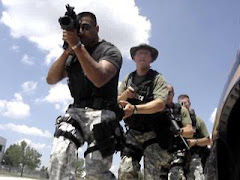
During a discussion regarding some of the lessons learned over the last decade of special operations work, I was speaking informally with a few fellow special operations team leaders from various teams and the topic of the “cold bore shot” came up. For those unfamiliar with the term, in a firearms system, the “cold bore shot” is usually considered the “first shot of the day”.
Following the "cold bore" shot, shooters may compensate for poor technique, poorly sighted weapon system, or both by adjusting their point of aim to change their point of impact (sometimes referred to as “Kentucky windage”). As a Special Operations Team Leader and Tactical Trainer, the “cold bore shot” gives me insight into the shooter at three critical levels:
· Technical/Operational level – Is my shooter using proper technique? Does my shooter have a properly sighted (“zeroed”) weapon system?
· Tactical/Strategic level – Will my shooter’s first shot be effective or does it provide a marker from which to use “Kentucky windage”? In counter-sniper missions, hostage rescue missions, and urban operations, using ineffective marksmanship as a tool to “walk” one’s rounds towards the intended target is an unsatisfactory tactic with dire ramifications.
· Mindset/Leadership level – Is there something beyond the weapon technology or operator’s skill lacking such as will? In other words, do my shooters, even though they are trained to continue actions on the target until the threat has been stopped, see each and every round fired- from first (and particularly, the first) to last- as being significant with the potential to stop the threat, secure the objective, and complete the mission?
These concepts have been reduced to a single phrase in Japanese martial arts that encompass the Operational, Strategic, and Leadership levels of analysis outlined above. This phase, ichi-go; ichi-e, captures the Zen essence of Japanese warrior training ideals and was popularized by Naosuke Ii in the 19th century work, Chanoyu Ichi-e Shu ( a text that describes the spirit of the Japanese Tea Ceremony as being one of “one encounter; one opportunity”).
Ichi-go; Ichi-e (one encounter; one opportunity) is a principle which, when applied to one’s practice, becomes the foundation of proper mindsets/attitudes (referred to as shin in Japanese martial arts). Ichi-go; Ichi-e based practice guides the student to see each repetition performed as the only repetition while it is being performed. In other words, using the example of a fire and maneuver course on a tactical shooting range, if a first shot is not perfect, there is no restarting the course – one simply follows through making the next shot the “only” shot followed by the next and the next. Similarly, for a martial artist, if during the practice of a technique, one does not maneuver correctly initially, there is no “do-over”. One simply must make the next movement “the only movement” or adapt to a different maneuver that is appropriately linked to the first movement. With practice and proper attitude, operations, strategic and leadership skills grow interdependently; the proof is in the seamless transitions that allow the expert to seem as if mistakes are never made. A “mistake” is simply seen as an alternate problem solving point and the expert simply adapts appropriately and unconsciously (termed as unconscious competence - see previous discussions on “Ju”).
This level of mastery is not only desirable at a physical level, but also (and probably more importantly) at a mental level; Seizan-Ryu teaching methods place a great deal of emphasis on the psycho-motor aspects of training that develop mental adaptability as well as physical skills flow. These methods are present at all levels of all training programs at Seizan Ryu Academies. The methods include systematic instruction that is exacting in its technical nature, but simultaneously conceptual in a manner such that the student absorbs the “whole picture” and understands the particular technical piece’s influence upon the “whole picture”. This type of training fosters a level of both skill and confidence that facilitate the resolution of complex problems in real time that occur in the various venues of life - from an urban combat problem on the battlefield to a supply-chain management problem in the international business arena, and everything in between; the “cold bore” shot is an analogy to the mindset of “one encounter-one opportunity”; that every action has significance and the potential to influence the outcome of given situation. It is one of the hallmarks of Seizan-Ryu students and, based on our students' feedback, provides some of the most positive impact in the area of life management skills for those students.
During a discussion regarding some of the lessons learned over the last decade of special operations work, I was speaking informally with a few fellow special operations team leaders from various teams and the topic of the “cold bore shot” came up. For those unfamiliar with the term, in a firearms system, the “cold bore shot” is usually considered the “first shot of the day”.
Following the "cold bore" shot, shooters may compensate for poor technique, poorly sighted weapon system, or both by adjusting their point of aim to change their point of impact (sometimes referred to as “Kentucky windage”). As a Special Operations Team Leader and Tactical Trainer, the “cold bore shot” gives me insight into the shooter at three critical levels:
· Technical/Operational level – Is my shooter using proper technique? Does my shooter have a properly sighted (“zeroed”) weapon system?
· Tactical/Strategic level – Will my shooter’s first shot be effective or does it provide a marker from which to use “Kentucky windage”? In counter-sniper missions, hostage rescue missions, and urban operations, using ineffective marksmanship as a tool to “walk” one’s rounds towards the intended target is an unsatisfactory tactic with dire ramifications.
· Mindset/Leadership level – Is there something beyond the weapon technology or operator’s skill lacking such as will? In other words, do my shooters, even though they are trained to continue actions on the target until the threat has been stopped, see each and every round fired- from first (and particularly, the first) to last- as being significant with the potential to stop the threat, secure the objective, and complete the mission?
These concepts have been reduced to a single phrase in Japanese martial arts that encompass the Operational, Strategic, and Leadership levels of analysis outlined above. This phase, ichi-go; ichi-e, captures the Zen essence of Japanese warrior training ideals and was popularized by Naosuke Ii in the 19th century work, Chanoyu Ichi-e Shu ( a text that describes the spirit of the Japanese Tea Ceremony as being one of “one encounter; one opportunity”).
Ichi-go; Ichi-e (one encounter; one opportunity) is a principle which, when applied to one’s practice, becomes the foundation of proper mindsets/attitudes (referred to as shin in Japanese martial arts). Ichi-go; Ichi-e based practice guides the student to see each repetition performed as the only repetition while it is being performed. In other words, using the example of a fire and maneuver course on a tactical shooting range, if a first shot is not perfect, there is no restarting the course – one simply follows through making the next shot the “only” shot followed by the next and the next. Similarly, for a martial artist, if during the practice of a technique, one does not maneuver correctly initially, there is no “do-over”. One simply must make the next movement “the only movement” or adapt to a different maneuver that is appropriately linked to the first movement. With practice and proper attitude, operations, strategic and leadership skills grow interdependently; the proof is in the seamless transitions that allow the expert to seem as if mistakes are never made. A “mistake” is simply seen as an alternate problem solving point and the expert simply adapts appropriately and unconsciously (termed as unconscious competence - see previous discussions on “Ju”).
This level of mastery is not only desirable at a physical level, but also (and probably more importantly) at a mental level; Seizan-Ryu teaching methods place a great deal of emphasis on the psycho-motor aspects of training that develop mental adaptability as well as physical skills flow. These methods are present at all levels of all training programs at Seizan Ryu Academies. The methods include systematic instruction that is exacting in its technical nature, but simultaneously conceptual in a manner such that the student absorbs the “whole picture” and understands the particular technical piece’s influence upon the “whole picture”. This type of training fosters a level of both skill and confidence that facilitate the resolution of complex problems in real time that occur in the various venues of life - from an urban combat problem on the battlefield to a supply-chain management problem in the international business arena, and everything in between; the “cold bore” shot is an analogy to the mindset of “one encounter-one opportunity”; that every action has significance and the potential to influence the outcome of given situation. It is one of the hallmarks of Seizan-Ryu students and, based on our students' feedback, provides some of the most positive impact in the area of life management skills for those students.
Friday, June 11, 2010
2010 Midwest Academy School Shirts
Pre-order School T-shirts (See Student Bulletin Board at the Academy) - the 2010 design options are as follows:
- Black T-Shirts (Either Hanes Pre-Shrunk Beefy-Tee or Alo Men’s Performance Tee)
- Red Seizan Ryu seal on the left chest on the front
- Sho-Chiku-Bae above “The Midwest Academy” on the back.
- All sizes available (add $1.50 for 2XL and $2.00 for 3XL)
- Pre-order required, but please do not make payments until you receive your order.
Sunday, February 21, 2010
New School Announcement
Following the New Year, the Connecticut Academy of Martial Arts (CtAMA) opened its doors to accept new students. CtAMA continues the growth and availability of quality instruction in art of Seizan Ryu Kempo Jujutsu. CtAMA's director, Jeremiah Minner, is a graduate of the United States Naval Academy and a veteran Naval Officer. For more information on this location, use the link at the bottom of this page.
Subscribe to:
Posts (Atom)

 Posts
Posts

