
Monday, January 3, 2011


Friday, October 15, 2010
"Cold Bore" Shot
“Cold Bore Shot”: Integrating “Ju” and “Shin” for more effective Life Management.
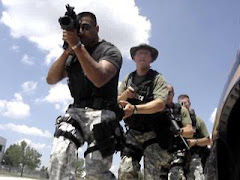
During a discussion regarding some of the lessons learned over the last decade of special operations work, I was speaking informally with a few fellow special operations team leaders from various teams and the topic of the “cold bore shot” came up. For those unfamiliar with the term, in a firearms system, the “cold bore shot” is usually considered the “first shot of the day”.
Following the "cold bore" shot, shooters may compensate for poor technique, poorly sighted weapon system, or both by adjusting their point of aim to change their point of impact (sometimes referred to as “Kentucky windage”). As a Special Operations Team Leader and Tactical Trainer, the “cold bore shot” gives me insight into the shooter at three critical levels:
· Technical/Operational level – Is my shooter using proper technique? Does my shooter have a properly sighted (“zeroed”) weapon system?
· Tactical/Strategic level – Will my shooter’s first shot be effective or does it provide a marker from which to use “Kentucky windage”? In counter-sniper missions, hostage rescue missions, and urban operations, using ineffective marksmanship as a tool to “walk” one’s rounds towards the intended target is an unsatisfactory tactic with dire ramifications.
· Mindset/Leadership level – Is there something beyond the weapon technology or operator’s skill lacking such as will? In other words, do my shooters, even though they are trained to continue actions on the target until the threat has been stopped, see each and every round fired- from first (and particularly, the first) to last- as being significant with the potential to stop the threat, secure the objective, and complete the mission?
These concepts have been reduced to a single phrase in Japanese martial arts that encompass the Operational, Strategic, and Leadership levels of analysis outlined above. This phase, ichi-go; ichi-e, captures the Zen essence of Japanese warrior training ideals and was popularized by Naosuke Ii in the 19th century work, Chanoyu Ichi-e Shu ( a text that describes the spirit of the Japanese Tea Ceremony as being one of “one encounter; one opportunity”).
Ichi-go; Ichi-e (one encounter; one opportunity) is a principle which, when applied to one’s practice, becomes the foundation of proper mindsets/attitudes (referred to as shin in Japanese martial arts). Ichi-go; Ichi-e based practice guides the student to see each repetition performed as the only repetition while it is being performed. In other words, using the example of a fire and maneuver course on a tactical shooting range, if a first shot is not perfect, there is no restarting the course – one simply follows through making the next shot the “only” shot followed by the next and the next. Similarly, for a martial artist, if during the practice of a technique, one does not maneuver correctly initially, there is no “do-over”. One simply must make the next movement “the only movement” or adapt to a different maneuver that is appropriately linked to the first movement. With practice and proper attitude, operations, strategic and leadership skills grow interdependently; the proof is in the seamless transitions that allow the expert to seem as if mistakes are never made. A “mistake” is simply seen as an alternate problem solving point and the expert simply adapts appropriately and unconsciously (termed as unconscious competence - see previous discussions on “Ju”).
This level of mastery is not only desirable at a physical level, but also (and probably more importantly) at a mental level; Seizan-Ryu teaching methods place a great deal of emphasis on the psycho-motor aspects of training that develop mental adaptability as well as physical skills flow. These methods are present at all levels of all training programs at Seizan Ryu Academies. The methods include systematic instruction that is exacting in its technical nature, but simultaneously conceptual in a manner such that the student absorbs the “whole picture” and understands the particular technical piece’s influence upon the “whole picture”. This type of training fosters a level of both skill and confidence that facilitate the resolution of complex problems in real time that occur in the various venues of life - from an urban combat problem on the battlefield to a supply-chain management problem in the international business arena, and everything in between; the “cold bore” shot is an analogy to the mindset of “one encounter-one opportunity”; that every action has significance and the potential to influence the outcome of given situation. It is one of the hallmarks of Seizan-Ryu students and, based on our students' feedback, provides some of the most positive impact in the area of life management skills for those students.
During a discussion regarding some of the lessons learned over the last decade of special operations work, I was speaking informally with a few fellow special operations team leaders from various teams and the topic of the “cold bore shot” came up. For those unfamiliar with the term, in a firearms system, the “cold bore shot” is usually considered the “first shot of the day”.
Following the "cold bore" shot, shooters may compensate for poor technique, poorly sighted weapon system, or both by adjusting their point of aim to change their point of impact (sometimes referred to as “Kentucky windage”). As a Special Operations Team Leader and Tactical Trainer, the “cold bore shot” gives me insight into the shooter at three critical levels:
· Technical/Operational level – Is my shooter using proper technique? Does my shooter have a properly sighted (“zeroed”) weapon system?
· Tactical/Strategic level – Will my shooter’s first shot be effective or does it provide a marker from which to use “Kentucky windage”? In counter-sniper missions, hostage rescue missions, and urban operations, using ineffective marksmanship as a tool to “walk” one’s rounds towards the intended target is an unsatisfactory tactic with dire ramifications.
· Mindset/Leadership level – Is there something beyond the weapon technology or operator’s skill lacking such as will? In other words, do my shooters, even though they are trained to continue actions on the target until the threat has been stopped, see each and every round fired- from first (and particularly, the first) to last- as being significant with the potential to stop the threat, secure the objective, and complete the mission?
These concepts have been reduced to a single phrase in Japanese martial arts that encompass the Operational, Strategic, and Leadership levels of analysis outlined above. This phase, ichi-go; ichi-e, captures the Zen essence of Japanese warrior training ideals and was popularized by Naosuke Ii in the 19th century work, Chanoyu Ichi-e Shu ( a text that describes the spirit of the Japanese Tea Ceremony as being one of “one encounter; one opportunity”).
Ichi-go; Ichi-e (one encounter; one opportunity) is a principle which, when applied to one’s practice, becomes the foundation of proper mindsets/attitudes (referred to as shin in Japanese martial arts). Ichi-go; Ichi-e based practice guides the student to see each repetition performed as the only repetition while it is being performed. In other words, using the example of a fire and maneuver course on a tactical shooting range, if a first shot is not perfect, there is no restarting the course – one simply follows through making the next shot the “only” shot followed by the next and the next. Similarly, for a martial artist, if during the practice of a technique, one does not maneuver correctly initially, there is no “do-over”. One simply must make the next movement “the only movement” or adapt to a different maneuver that is appropriately linked to the first movement. With practice and proper attitude, operations, strategic and leadership skills grow interdependently; the proof is in the seamless transitions that allow the expert to seem as if mistakes are never made. A “mistake” is simply seen as an alternate problem solving point and the expert simply adapts appropriately and unconsciously (termed as unconscious competence - see previous discussions on “Ju”).
This level of mastery is not only desirable at a physical level, but also (and probably more importantly) at a mental level; Seizan-Ryu teaching methods place a great deal of emphasis on the psycho-motor aspects of training that develop mental adaptability as well as physical skills flow. These methods are present at all levels of all training programs at Seizan Ryu Academies. The methods include systematic instruction that is exacting in its technical nature, but simultaneously conceptual in a manner such that the student absorbs the “whole picture” and understands the particular technical piece’s influence upon the “whole picture”. This type of training fosters a level of both skill and confidence that facilitate the resolution of complex problems in real time that occur in the various venues of life - from an urban combat problem on the battlefield to a supply-chain management problem in the international business arena, and everything in between; the “cold bore” shot is an analogy to the mindset of “one encounter-one opportunity”; that every action has significance and the potential to influence the outcome of given situation. It is one of the hallmarks of Seizan-Ryu students and, based on our students' feedback, provides some of the most positive impact in the area of life management skills for those students.
Friday, June 11, 2010
2010 Midwest Academy School Shirts
Pre-order School T-shirts (See Student Bulletin Board at the Academy) - the 2010 design options are as follows:
- Black T-Shirts (Either Hanes Pre-Shrunk Beefy-Tee or Alo Men’s Performance Tee)
- Red Seizan Ryu seal on the left chest on the front
- Sho-Chiku-Bae above “The Midwest Academy” on the back.
- All sizes available (add $1.50 for 2XL and $2.00 for 3XL)
- Pre-order required, but please do not make payments until you receive your order.
Sunday, February 21, 2010
New School Announcement
Following the New Year, the Connecticut Academy of Martial Arts (CtAMA) opened its doors to accept new students. CtAMA continues the growth and availability of quality instruction in art of Seizan Ryu Kempo Jujutsu. CtAMA's director, Jeremiah Minner, is a graduate of the United States Naval Academy and a veteran Naval Officer. For more information on this location, use the link at the bottom of this page.
Friday, January 8, 2010
Leadership Development Group - January 9, 2010
Midwest Academy students in the Leadership Development Group, we will be training on January 9, 2010 at noon.
- David
- David
Sunday, January 3, 2010
Integrated Training ("Ju" Part 2)

As outlined to in the last article discussing “ju”, a certain environment best fosters the attributes of “ju” to develop. Recall from the previous article on the topic that we defined “ju” to include attributes of “softness” in the sense of being malleable, supple, and energetically efficient. We also stated that “ju” extrapolates itself into all areas of a practitioner’s life and is not just something that is temporal to the training mat.
Most writings at this juncture would delve into the aspects of learning basic movements and repeating them until such time as the ‘neurological pathways’ develop and the movement becomes ‘internalized’. For those who desire a greater understanding on the process of internalization, please refer to the work done by Bruce Siddle in this area; a working understanding, however, should include the basic process that memory is based upon the repeated firing of electro-chemical impulses within the neurological system. These impulses travel from nerve cell to nerve cell. When something new is learned, the sequence of cell-to-cell electro-chemical communication is not as efficient as it is after repetition and/or strong association. Myelin is a fatty protein which ‘coats’ the pathways between cell-to-cell communication; greater repetition or association results in a greater coating of myelin which, in turn, allows for the electro-chemical impulses to travel from cell to cell more efficiently and accurately (Siddle, 1995, pp. 25-30).
The process of internalization and the training cycle is discussed frequently at the Academy, however, there are numerous other studies and writings that detail the training cycle that any serious student or teacher should become familiar with. The training cycle essentially describes these four general stages of learning/skill progression:
· Unconscious incompetence – one is not aware of the gaps in one’s knowledge;
· Conscious incompetence – one is aware of the gaps in one’s knowledge, but not able to correct them;
· Conscious competence – one can correct the gap in knowledge actively thinking about it;
· Unconscious competence – the correction is internalized and no thought required to produce the correct result.
Unconscious competence implies ‘mastery’ of a skill set (we place the term mastery in quotes since someone at this level generally understands that there is a daily routine or process that must be repeated in order to maintain the viability of a skill set – it is a journey and not a destination in both a physical and philosophical sense); one has repeated the skill until it cannot be performed incorrectly. If this process were singularly applied to each task in one’s life where mastery is desired, the sheer magnitude of a linear learning and internalizing process would prohibit the ability to either have any sort of life outside skill mastery or master more than a single set of skills.
The process of internalization and the training cycle is discussed frequently at the Academy, however, there are numerous other studies and writings that detail the training cycle that any serious student or teacher should become familiar with. The training cycle essentially describes these four general stages of learning/skill progression:
· Unconscious incompetence – one is not aware of the gaps in one’s knowledge;
· Conscious incompetence – one is aware of the gaps in one’s knowledge, but not able to correct them;
· Conscious competence – one can correct the gap in knowledge actively thinking about it;
· Unconscious competence – the correction is internalized and no thought required to produce the correct result.
Unconscious competence implies ‘mastery’ of a skill set (we place the term mastery in quotes since someone at this level generally understands that there is a daily routine or process that must be repeated in order to maintain the viability of a skill set – it is a journey and not a destination in both a physical and philosophical sense); one has repeated the skill until it cannot be performed incorrectly. If this process were singularly applied to each task in one’s life where mastery is desired, the sheer magnitude of a linear learning and internalizing process would prohibit the ability to either have any sort of life outside skill mastery or master more than a single set of skills.
Re-enter the concept of “ju”. "Ju" is reflected in the training structure itself for quality training programs. "Ju" allows for the efficient and simultaneous development of the attributes sought to be mastered. At the Midwest Academy, the attributes sought to be developed are analogized by the traditional Japanese motif of "sho-chiku-bae" or "pine-bamboo-plum". The motif represents the following attributes respectively (Mitose, 1953, p. I):
· Pine (sho or matsuba) – strength
· Bamboo (chiku or take) – flexibility
· Plum (baika) – endurance
· Pine (sho or matsuba) – strength
· Bamboo (chiku or take) – flexibility
· Plum (baika) – endurance
The "why's" of the motif are detailed in the Academy's student guide; a brief summary, however, is that within the analogy, each of the symbols (pine, bamboo, and plum) even singularly actually represents all three tributes (therefore some Seizan Ryu schools use a single symbol to illustrate the entire motif as well); each one may have a more predominant trait, but upon closer examination, it is realized that each is a holistic compilation of all three attributes.
The strength-flexibility-endurance analogy, like much in the martial arts, is intended for multi-layered development. In other words, it is not just the physical development of flexibility, for example, but mental adaptability as well. It is not only muscular strength, but strength of character that is developed. Endurance is not measured only by caloric burn at a given heart rate, but also by perseverance in the face of adversity. High quality martial arts programs functionally integrate the multi-layered development of strength, flexibility, and endurance. The integrated approach to training reflects the principle of efficiency that is connoted by "ju". Why is that important?
Paul Howe, US Army Special Operations/Delta veteran, comments on the integration of training, "As I have gotten older and find myself spending a great deal of training time on the road, I have relearned the value of a daily training routine. Your mental state of mind whether stressed, relaxed, focused or sharp is up to you and probably the most important factor in developing and sustaining a routine…few combat systems complement each other. You can spend years leaning one stance in martial arts, then learn a new one for pistol, rifle, etc. Try and find one stance that will work for rifle, pistol, knife, hand combat, etc. This way, your platform will be the same for all systems and you will learn and establish it rapidly…you might have minor weight transfers, but as I said they will be minor. Core balance is core balance. In the end, if you can find one system that compliments each other, you will progress faster in leaning your tactical skills" (Howe, 2009, pp. 26-28). Howe’s comments can also be extrapolated to include the content of multi-layered development. Good mindset developed in training is not useful if it countered by poor mindset elsewhere. Emotional and mental development must be included within the training structure of the program, the culture of the venue, and atmosphere fostered by the interaction of the training group.
As Paul Howe describes, integrated training allows superior results to be achieved more expeditiously than a linear training model. The Seizan Ryu students at the Academy begin an integrated training format from their initial training experiences. Because physical health/holistic fitness is a key attribute that any high level warrior discipline seeks to develop within its practitioners, the initial introduction to integrated training begins at a physical level. Various drills, solo and partner exercises develop the practitioner's physical strength, suppleness, and endurance simultaneously. As the physical exercises become more challenging, the student’s opportunity to develop emotionally and mentally begins to emerges as well. A high quality training culture with teachers skilled in student development can collaboratively capture this opportunity for high quality student development. Done correctly, this results in their physical confidence increasing and, in tandem, their social confidence and basic leadership qualities also begin to emerge; as the practitioner's set of tactical solutions expands, so tends their mental flexibility to do the same; it is not uncommon for students of warrior disciples to begin to see solutions in all areas of life – solutions that others overlook or often cannot conceptualize. Consider, for example, the amount of literature on leadership and personal development that has been authored by America’s military veterans within the last quarter century – their ability to seek overlooked tactical solutions has extrapolated into areas pertaining to business, politics, personal development, management, etc. Perpetual optimism and “can-do” attitudes become natural responses to life's challenges. The process of repetitive training to hone a skill set over time not only builds physical endurance, but also an internal sense of patience and perseverance that translates into an emotional tenacity. These are all objectives of the Academy’s training programs and our approach using integrated training allows for “ju” or efficiency to be the Academy’s training standard.
I hope this brief message allows one to see that “ju” is not only a quality of technical skill, but a concept that our training structure is founded upon and a quality we sincerely hope allows our students to be efficient both inside and outside the dojo.
References
Howe, P. 2009. The tactical trainer: a few thoughts on training and training management from a former special operations soldier. Authorhouse. Bloomington, IN.
Mitose, J. 1953. What is self defense? kenpo-jiu-jitsu. 4th Ed. Kosho-shorei publishing. Sacramento, CA.
Siddle, B. 1995. Sharpening the warrior’s edge: the psychology & science of training. 5th Ed. PPCT Research Publications. Millstadt, Il.
I hope this brief message allows one to see that “ju” is not only a quality of technical skill, but a concept that our training structure is founded upon and a quality we sincerely hope allows our students to be efficient both inside and outside the dojo.
References
Howe, P. 2009. The tactical trainer: a few thoughts on training and training management from a former special operations soldier. Authorhouse. Bloomington, IN.
Mitose, J. 1953. What is self defense? kenpo-jiu-jitsu. 4th Ed. Kosho-shorei publishing. Sacramento, CA.
Siddle, B. 1995. Sharpening the warrior’s edge: the psychology & science of training. 5th Ed. PPCT Research Publications. Millstadt, Il.
Monday, September 14, 2009
"Ju" (Part 1)

Due in part to the popularity of mixed martial arts events, jujutsu has become a word that most Americans recognize. Different images come to mind depending on one’s experience with the term. Some ideas come from spectators of mix martial arts events; others come from students of jujutsu that are at various points along their journey in the art. What does the term really mean?
In 1953 James M. Mitose wrote a book titled “What Is Self Defense? (Kenpo Jiu-Jitsu)”[1]. The term “ju” is sometimes translated as “gentle”, but anyone who has seen or participated in a jujutsu training session would probably protest that connotation. If not "gentile", what does “ju” mean then? “The Modern Reader’s Japanese-English Character Dictionary” by Andrew Nelson received the 1969 Prize of the Society for the Promotion of International Cultural Relations award and translates the term “ju” to include, “softness” (Nelson, 1988, p. 645).
Does that imply that the technical skills of jujutsu are “soft”? For clarification on this, one can refer to The Wordbook of Seizan-ryu, a collection of kanji and translations specific to Japanese martial arts, which provides the following on the term jujutsu: “presumably, this term was originally meant to describe the art in contrast to ken-jitsu (swordsmanship), bo-jutsu (staff fighting), etc., that is, in general ‘un-armed’ fighting. This use of the word goes back at least to the late 16th century and Yagyu Munenori (and probably earlier). Much later, Kano-sensei glossed it to mean natural, efficient, ‘inadvertent’ movements and techniques, gentile in the sense that the art follows natural laws” (Roemer, n.d., p. 56). Perhaps one of the easiest definitions to digest, and use for the ideas that follow is that “ju” is, “soft, flexible, malleable or supple” (Pauley, 2009, p. 61).
Far from an etymological skirmish between various translations of the term, there are some common themes that unite these definitions. To begin with, there are the concepts of economy and naturalness that colors these definitions. There is also a an emphasis on efficiency without imposed effort or undue energy that is implied. Students of the martial arts realize that it is often difficult to articulate some of the terminology used within their studies as these qualities just mentioned are qualities of being or terms associated with an experience as opposed to analytical articulation for the sake of semantics. “Ju” is a quality that is requires a certain level of training, skill and experience in order to be present. In other words, a specific technique is not necessarily “ju” in nature simply because a variant or semblance of the technique exists within a jujutsu system’s curriculum. Furthermore “ju” is a quality that can be present outside the settings of a dojo. Personal development expert Anthony Robbins asks, “Have you ever had the experience of being on a roll, the feeling that you could do no wrong? A time when everything seemed to go right?...Maybe it was a time when you amazed yourself by doing something …” (Robbins, 1986, p. 35).
The experience that Robbins describes is something that most martial arts students can relate to. It is the moment when a particular movement feels effortless. As a teacher with over a decade and a half of teaching experience, the author personally enjoys the moment when a student completes a technique and remarks, “Wow, that was easy!”. That experience is the quality of “ju”.
The purpose of the next series of articles is to set the environment for these moments to occur with greater ease. “Ju” requires an internalization of the basics. Internalization is not a linear process. In other words the more you work on the basics, the better the basics get. One does not reach a destination point where one “has it”. And, like all physical skills, the basics are perishable as anyone who has had a lengthy break in training can attest to. The concept for students of all levels to remember is that the better the basics are internalized, the more smoothly they can be applied.
The concept just mentioned can also be extrapolated into all areas of life. This is a key perspective to adopt if one wishes to have one’s training positively impact one’s total quality of life. Every aspect of life, whether you define the role in terms of occupation (student, employee, or business owner for example), relationship (friend, parent, or husband for example), personal goals (health, finance, or time management for example) or any other way of grouping one’s roles and responsibilities, has a set of “basics” that, when internalized correctly, increase the efficiency of one’s efforts by corresponding to a natural order that produces a certain outcome. The value of internalized basics will be discussed in the next article. Until then, continue to train hard and enjoy the journey!
References
Colorado Academy of Martial Arts. (n.d.) Seizan-ryu Tangoshu “The Wordbook of Seizan-ryu”. Littleton, CO: Roemer, Roland S.
Mitose, James M. (1980). What is Self Defense? (Kenpo Jiu-Jitsu)(2nd Ed). Sacramento, California: Kosho-Shorei Publishing Co. (Original work published 1953).
Nelson, Andrew N. (1988). The Modern Readers Japanese-English Character Dictionary (26th Ed). Rutland, Vermont & Tokyo, Japan: Charles E. Tuttle Co. (Original work published 1962).
Pauley, Daniel C. (2009). Pauley’s Guide: A Dictionary of Japanese Martial Arts and Culture. Dolores, CO Anaguma Seizan Publications.
Robbins, Anthony. (1986). Unlimited Power. Fawcett Columbine, New York: Ballantine Books.
Colorado Academy of Martial Arts. (n.d.) Seizan-ryu Tangoshu “The Wordbook of Seizan-ryu”. Littleton, CO: Roemer, Roland S.
Mitose, James M. (1980). What is Self Defense? (Kenpo Jiu-Jitsu)(2nd Ed). Sacramento, California: Kosho-Shorei Publishing Co. (Original work published 1953).
Nelson, Andrew N. (1988). The Modern Readers Japanese-English Character Dictionary (26th Ed). Rutland, Vermont & Tokyo, Japan: Charles E. Tuttle Co. (Original work published 1962).
Pauley, Daniel C. (2009). Pauley’s Guide: A Dictionary of Japanese Martial Arts and Culture. Dolores, CO Anaguma Seizan Publications.
Robbins, Anthony. (1986). Unlimited Power. Fawcett Columbine, New York: Ballantine Books.
[1] Note to the reader – the terms “Kenpo” and “Kempo” as well as “Jiu-Jitsu” and “Jujutsu” illustrate the difficulty in romanizing the sounds of Asian languages. Kenpo and Kempo are the same terms as are Jiu-Jitsu and Jujutsu.
Subscribe to:
Posts (Atom)

 Posts
Posts

